
 INSTITUTE
Recount
Tell me what happened.
Share the experience through words, drawing, pictures, sequencing or another accessible communication method.
→A NEXIE Productised Service
Understand what happened. Discover what was needed. Practise what comes next.
Kidspired is a guided learning, behaviour and relationship-support service that applies the NEXIE Matrix and NEXIE 6R Intervention Cycle with a safe, prepared adult—the child’s NEXIE Go-To Person.
Why Kidspired exists
Children and young people can be judged by what they did before anyone helps them understand what happened. Behaviour may reflect an unmet need, fear, overwhelm, communication difficulty, environmental mismatch, relationship rupture, learning demand, protective response, values conflict, adversity or a capability still developing.
Understanding does not excuse harm.It creates the conditions for responsibility, repair, learning and a more adaptive response.
NEXIE asks who the child is, what their blueprint reveals and what is influencing their capacity to communicate, relate, regulate, learn and participate.
The Kidspired principle
Kidspired does not expect a distressed child to complete a worksheet, explain motives or make a wise decision while the brain and body are responding to threat.
Regulate → Relate → Reflect → Rehearse → Reconnect
Understanding the child’s blueprint
SYMBEB and the Six Social Brains may support curiosity about strengths, communication, values, relationships, motivation, stress, protective responses and conditions for re-engagement.
The NEXIE Matrix
Move away from “Why did you do that?” and toward what happened, what mattered and what capability may help next time.
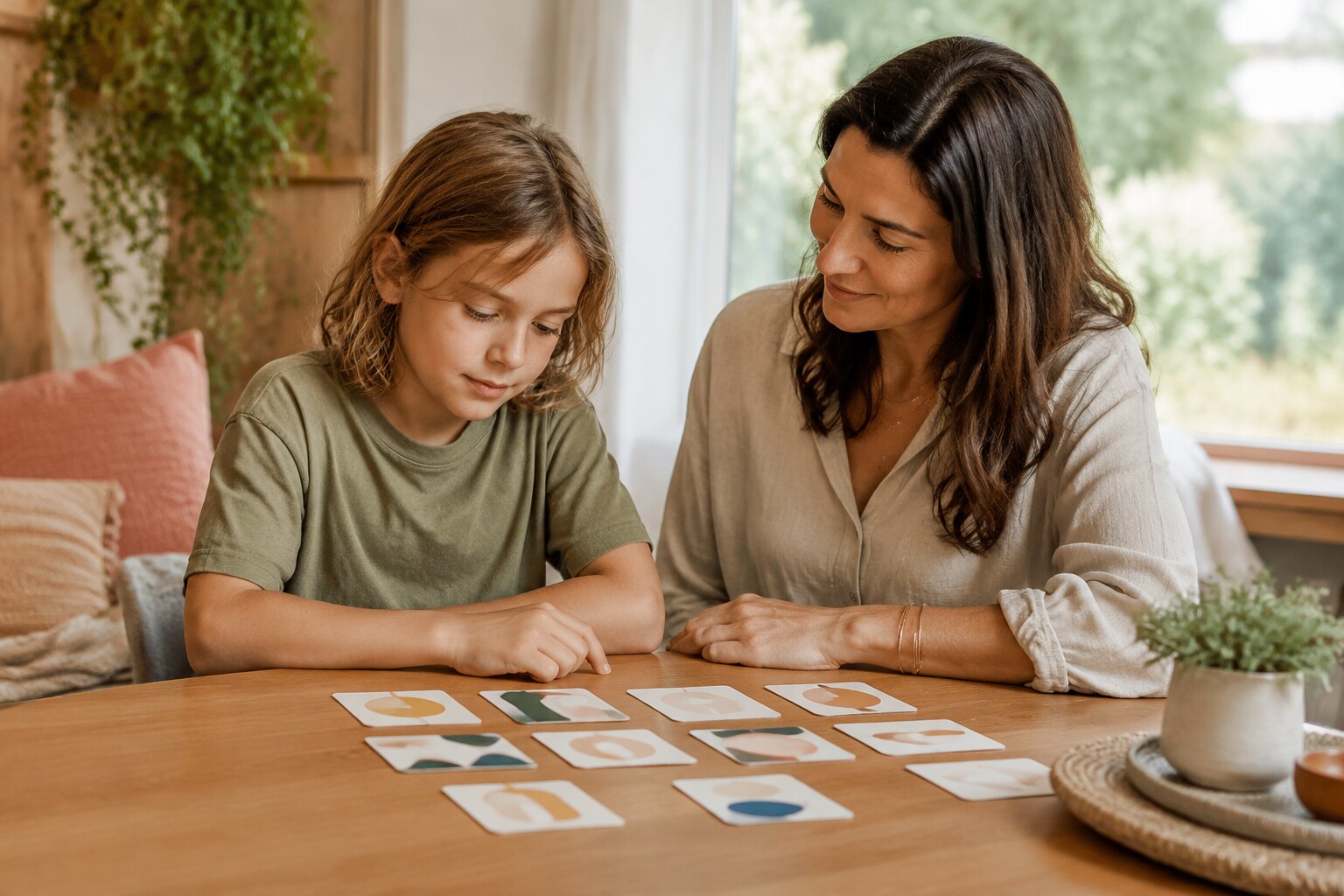
Adapted through conversation, pictures, body cues, drawing, story, play, scenario cards, supported reflection, a youth worksheet or a future facilitated experience.
The NEXIE 6R Intervention Cycle
The first three Rs build understanding. The final three develop and rehearse integrated action.
Space, movement, sensory support, reduced language, calm presence, familiar routines or another agreed co-regulation strategy create the capacity for learning.
Share the experience through words, drawing, pictures, sequencing or another accessible communication method.
→Notice emotions, body signals, thoughts, urges and stress responses without automatically approving every action.
→Explore the value, need, boundary or relationship underneath the response while considering the experience of others.
→Consider another interpretation, an environmental change, a request for support or a response that protects the same need.
→Consider what worked, what did not, the impact, responsibility, repair and the capability still developing.
→Choose and rehearse an achievable phrase, strategy, boundary, repair action, quality statement or environmental support.
✓Qualities and virtues
A quality is selected with the child, connected to a real situation and translated into an observable, achievable response—not a reward chart or judgement of good and bad.
“When I feel left out, I can use courage to tell someone what I need.”
“When a plan changes, I can practise flexibility by asking what will happen next.”
“When I hurt someone, I can use responsibility to listen and help repair what happened.”
The Kidspired Agreement
The agreement records strengths, communication, values, stress signals, adjustments, adult responses, practice strategies, repair preferences, the Go-To Person and review pathways.
It is designed with the child—not imposed as a behaviour contract. Formal education, behaviour-support or clinical plans remain the responsibility of authorised professionals and organisations.
Space, clear choices and time to settle.
Stay calm, listen and reduce language.
Asking for help before I leave.
My parent, teacher or chosen mentor.
Two developmental formats
Children receive active co-regulation and visual facilitation. Young people develop supported reflective independence without losing access to a trusted adult.
Pictures, body-signal prompts, stories, drawing, play, short supported conversations, regulation choices, quality cards and repeated role-play.
The child is not expected to complete the process independently.A blueprint summary, 6R worksheet, dilemma map, emotion and body reflection, perspective-taking, repair options, quality statement and rehearsal plan.
Independent reflection remains connected to a Go-To Person.Where Kidspired may be used
Every setting keeps its own safeguarding, professional, disability, wellbeing, curriculum and referral responsibilities.
Use regulated times to understand recurring dilemmas, strengthen communication and develop shared family strategies.
Use an authorised, restorative learning process after regulation—not a punishment or compulsory isolation worksheet.
Use story, play, visuals and co-regulated practice to build emotional, relational and behavioural capability.
Qualified practitioners may integrate authorised tools within professional scope, consent and governance.
Support accessible communication, self-advocacy, relationship repair and participation.
A prepared NEXIE mentor may provide consistent educational reflection without representing mentoring as therapy.
The Kidspired Go-To Person
A parent, carer, educator, mentor, counsellor, allied-health practitioner, youth worker or other prepared adult may take this role within their actual qualifications and responsibilities.
A Kidspired facilitator or NEXIE mentor is not automatically a counsellor, therapist or clinician.
What Kidspired is designed to develop
These are intended developmental outcomes. Progress varies with age, communication, disability, context, relationships, opportunity and support.
Applying the PEDICure Five Pillars
Correction means reviewing and adjusting the pathway—not punishing or correcting the child’s identity.
Understand the blueprint, establish the Go-To Person, notice stress signals and agree on supportive conditions.
Teach accessible concepts about brain responses, emotions, communication, relationships, values and regulation.
Notice patterns across the child, relationships, environment, experiences and capacity without rushing to diagnosis.
Use the NEXIE Matrix and 6R Cycle to build understanding, repair and adaptive capability.
Review impact, repair what needs attention and refine the agreement, environment or response—not the child’s identity.
One protected service · Four editions
The Family and Youth Editions are the recommended initial commercial release. Education-wide and digital pathways require additional governance.
The Kidspired Productised Service
Different approved formats allow family, school, mentoring and professional pathways without treating every facilitator as clinically qualified.
Understand the child’s blueprint and co-create a Learning, Regulation and Relationship Agreement.
Teach and practise the 6R Intervention Cycle through fictional or low-intensity dilemmas.
Reflect on a real challenge after safety and regulation have been restored.
Practise co-regulation, communication, reflection and repair together.
Prepare authorised staff to use one consistent reflective process and accessible resources.
Use the blueprint, 6R worksheet and capability goals with a consistent Go-To Person.
Support qualified professionals applying Kidspired within independent scope.
Consent, participation, Go-To Person, communication, safety and boundaries.
Strengths, interests, relationships, stress signals and supportive environments.
Co-regulation preferences, readiness cues and adult responses.
Practise the pathway while calm using low-intensity examples first.
Map the dilemma, need, protective response, impact and capability.
Record shared responsibilities, supports, repair options and review dates.
Use calm-time rehearsal, recognise progress and revise unsuitable strategies.
Kidspired Service Pack
Selected editions may also include emotion, body, need and value cards; an Irritant and Response Map; family-practice activities; school guidance; session plans; safeguarding resources; participant handouts and defined Licensed Delivery Rights.
Service architecture, editions, boundaries and delivery sequence.
Accessible Recount-to-Reframe pathway with Regulate underneath.
Blueprint, dilemma, impact, repair and rehearsal reflection.
Co-regulation preferences, Go-To Person guide and collaborative plan.
Needs, values, virtues and observable capability statements.
For children, young people and families
The goal is not a perfectly regulated child. It is a relationship in which difficulties can be understood, worked through and used to develop capability.
Explore Kidspired for Families ↗For schools and services
Kidspired can complement existing safeguarding, behaviour-support, disability, wellbeing and student-support systems—but must not investigate serious incidents, replace disciplinary due process, obtain disclosures or override formal plans.
Explore Organisational Use ↗Training and work opportunities
Roles may include facilitator, youth mentor, family educator, school implementation facilitator, support worker, qualified professional, coordinator or authorised Neuropreneur.
Different roles require different qualifications, experience, supervision and use rights. Learning does not create clinical or regulated professional authority.
Future facilitated experience
A future child-safe app may provide regulation checks, child and youth modes, accessible communication, the guided 6R sequence, dilemma mapping, quality selection, rehearsal planning and Go-To Person connection.
It must not act as an unsupervised therapist, diagnose, give crisis advice or make high-stakes decisions. Development requires privacy-by-design, age-appropriate consent, security, accessibility and professional governance.
1Recount
2Resonate
3Respect
4Rethink
5Reflect
6Reframe
Questions and Answers
No. It is a co-regulated learning, reflection and capability-development service. It supports behaviour understanding, impact, responsibility, repair and rehearsal without reducing the child to the behaviour.
No. Understanding does not remove responsibility. It creates the conditions for responsibility to be meaningful, developmentally appropriate and connected with repair.
The reflective steps must not be forced during significant dysregulation. Safety, connection and co-regulation come first; reflection begins when sufficient capacity has returned.
The child pathway is adult-supported. Older young people may complete parts of the youth worksheet independently but should retain access to a trusted Go-To Person, especially for distressing or relationally significant issues.
No. It is an educational and reflective profile of strengths, preferences, relationships, stress signals and supportive conditions—not a diagnosis or prediction.
Information may contribute to collaborative planning with consent. Formal plans remain subject to the professional, organisational and legal requirements governing their development and authorisation.
Eligible professionals may use an appropriate edition within their existing qualifications, competence, consent processes and governance. Authority comes from their profession, not Kidspired training.
Yes, where the mentor has appropriate preparation and child-safety clearances and remains within educational and mentoring scope, with referral for clinical, statutory, safeguarding or emergency needs.
No. It is not an emergency, crisis, child-protection investigation or acute mental-health service. Immediate safety concerns require the appropriate emergency, safeguarding or crisis pathway.
Not automatically. Delivery depends on capability, completed learning, the selected Service Pack, child-safety requirements and the Licensed Delivery Rights supplied by NEXIE.
Purpose. Pathway. Possibility.