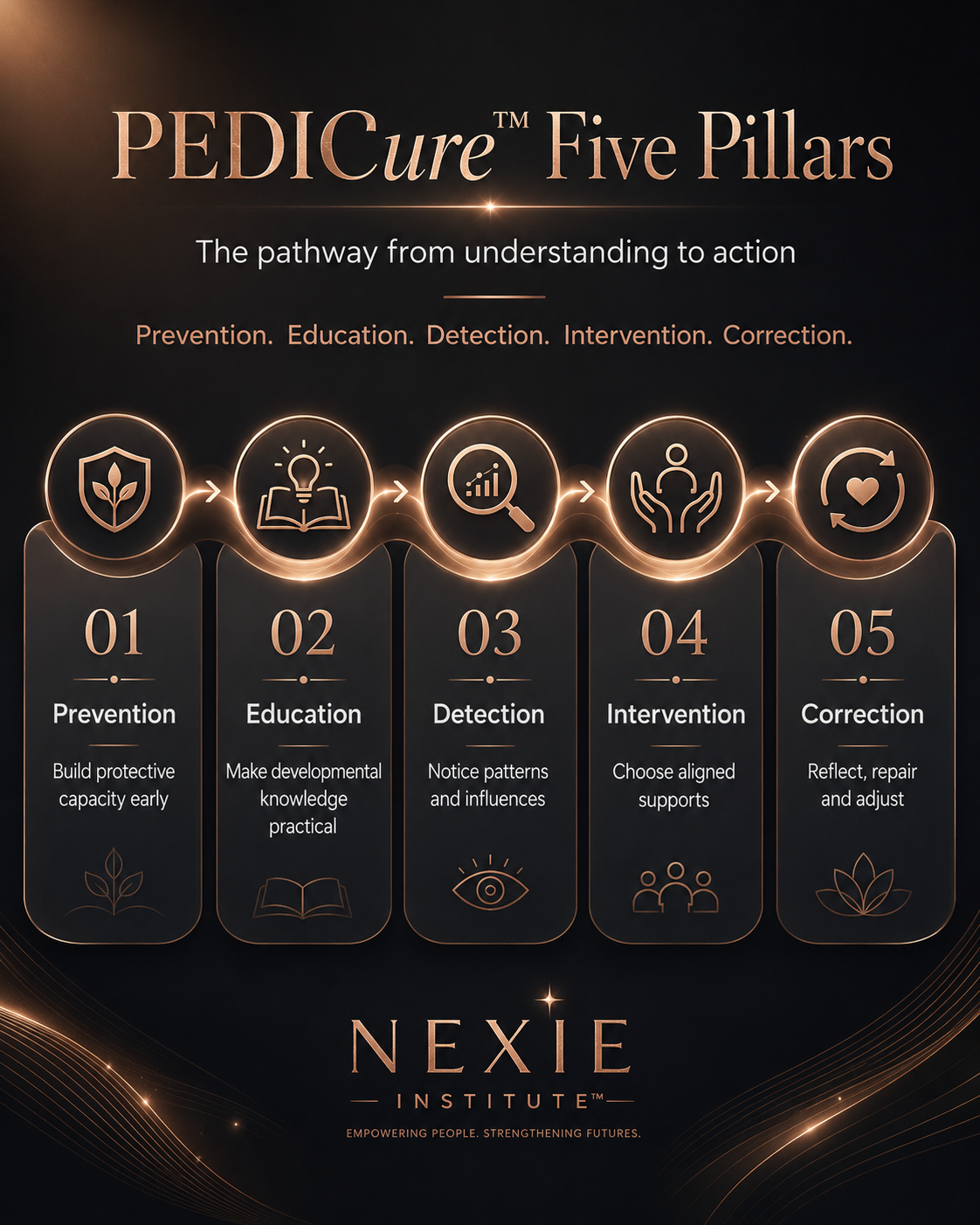
Five Connected Pillars for Developmental Practice
01Prevention
Build understanding, relationships, developmental conditions and protective capacity before challenges escalate. Prevention focuses on what can be strengthened early: connection, safety, routines, environment, regulation, communication and adult understanding.
Education
Make developmental knowledge accessible and practical so people can recognise what shapes learning, behaviour and wellbeing. Education helps parents, educators, practitioners and organisations build a shared language for understanding people, patterns and developmental needs.
Detection
Notice patterns and influences across the person, relationships, environment, experiences and current capacity — without rushing to diagnosis. Detection helps people observe what is happening, recognise contributing conditions and understand possible pathways before choosing action.
Intervention
Choose purposeful supports that fit the person and the conditions shaping the present moment. Intervention in NEXIE is guided by understanding. It asks what support, adjustment, teaching, relationship repair, resource or environmental change may be most aligned.
Correction
Reflect on what changed, repair what needs attention and adjust the approach so practice stays aligned with development. Correction is not punishment. It is the reflective process of learning from action, repairing where needed and refining the pathway forward.

 INSTITUTE