 INSTITUTE
Prevention
What strengthens capacity?Strengthen protective conditions, shared understanding, relationships and environments before difficulty escalates.
NEXIE™
NeuroEducation × Individual Experience
Developmental education for life, learning and work.
NEXIE helps people understand individual differences, recognise what may be affecting capacity and choose an informed next step. It brings developmental knowledge together with each person's Blueprint, relationships, environment, culture and lived experience.
Understanding Before Intervention.Why NEXIE exists
NEXIE grew from a concern that people are often judged by the behaviour visible in the moment without enough attention to what may have happened before it.
Stress, adversity, misunderstanding, relational conflict and environmental mismatch can change how people communicate, learn, regulate, participate and perform.
What happened to capacity here?
How can our response reduce harm rather than add to it?
NEXIE brings knowledge about neurodevelopment together with each person's unique Blueprint, relationships, environment, culture and lived experience.
The × represents integration: developmental knowledge must be understood through the individual rather than applied as a one-size-fits-all approach.
Relationships, environment and experience interact with individual developmental patterns over time.
NEXIE does not begin by asking only:
“What should this person be taught?”
It also asks:
“Who is this person? What are their individual patterns? What is influencing their capacity to communicate, relate, regulate, learn and participate?”
NEXIE Blueprints™
The NEXIE Blueprint identifies a person's natural strengths and preferred ways of connecting, thinking, learning and taking action.
It does not define or label the person. Life experiences influence how the Blueprint is expressed, strengthened, protected or constrained.
Explore NEXIE Blueprints ↗The Blueprint shows the individual's natural developmental pattern. Their experiences shape how that pattern is expressed. NEXIE brings both together.
The NEXIE Method™
The core methodology connects protective conditions, education, structured noticing, proportionate response and reflective correction.
Strengthen protective conditions, shared understanding, relationships and environments before difficulty escalates.
Build knowledge of development, individual difference, behaviour as communication, relationships, stress and environment.
Use structured noticing and observation without treating patterns as diagnosis, proof or a fixed label.
Choose a proportionate educational, relational or environmental response, referral or specialist support.
Review and correct the fit of the plan, environment or response. Correction means reflective improvement—not punishment.
The NEXIE ecosystem
Choose the pathway that matches your setting. An RTO pathway is available where nationally recognised training is relevant, but it is not compulsory for every NEXIE pathway.
Educator capability, applied practice, family partnership and implementation over time.
Explore this pathway ↗Contextualised developmental learning and workplace application alongside approved qualifications.
Explore this pathway ↗Universal learning, early connections, transition support and future continuity tools.
Explore this pathway ↗Role-appropriate learning, authorised facilitation and optional independent enterprise pathways.
Explore this pathway ↗Trauma-informed practice
NEXIE does not assume every difficulty is caused by trauma.
It does not diagnose trauma from behaviour.
Instead, trauma-informed practice means recognising that past or current adversity may influence responses and ensuring that our own actions prioritise safety, respect, choice, trust, collaboration and appropriate support.
We do not need to know a person's entire history to choose a safer response.
Prevention
For parents, educators, practitioners and leaders, prevention includes understanding:
NEXIE cannot prevent every adverse experience. It can help adults create safer, more stable, more nurturing relational and environmental conditions.
The science of relationships
NEXIE recognises that supportive relationships and environments can strengthen resilience and help buffer stress.
Development is shaped through ongoing interaction between biology, experience, relationships and environment.
Beyond assessment
NEXIE may use assessments, profiles, observations and existing reports to help understand the person. But the assessment is not the product. NEXIE teaches people what to do with that understanding.
NEXIE helps people respond in ways that reduce unnecessary escalation and support safety, understanding and repair.
Create more compatible conditions:
Who is NEXIE for?
Recognise how you function, what supports your capacity, what happens under stress and what helps you move forward.
NEXIE for Individuals ↗Understand how your own patterns, expectations, relationships and environment interact with your child’s development.
NEXIE for Parents & Families ↗Explore what affects engagement, behaviour, participation and learning capacity—and help learners communicate what they need.
NEXIE for Learners & Education ↗Understand patterns of communication, working preferences, relationships and conditions that support capacity.
NEXIE for Teams & Leaders ↗Work toward engagement, inclusion, manager capability, wellbeing, retention, learning and neuroinclusive work design.
NEXIE for Organisations ↗Across a lifetime
Adults learn to understand me.
Parents, carers and educators learn what supports my development and learning.
I increasingly recognise my own responses, strengths and needs.
I can communicate what supports my capacity and participate in decisions about my life, learning and work.
The long-term goal is not lifelong dependence on someone else interpreting the person. It is increasing self-understanding, communication and agency.

Parents as first educators
Parents are children’s first educators and first observers of development. NEXIE helps parents understand themselves, their child, the differences between them, relationships, environmental influences, behaviour as communication and signs that capacity may be changing.
NEXIE helps parents reflect on how they were parented, how stress affects their own responses, how learned relational patterns can be repeated, and how greater awareness can support more conscious and compatible responses.
Your Blueprint is part of who you are. Your experiences help shape how it shines.
The aim is to help parents become first educators, then informed advocates, while helping the child gradually develop their own voice.
Explore NEXIE Parenting ↗
Education
When students struggle, NEXIE encourages educators to ask:
“What happened to learning capacity?”
rather than beginning only with:
“How do we stop the behaviour?”
NEXIE helps educators consider whether behaviour, disengagement or dysregulation may reflect stress, misunderstanding, relational difficulty, environmental mismatch or reduced capacity rather than assuming deliberate non-compliance.
NEXIE Education examines development, learning demands, relationships, environment, communication, stress, participation, behaviour and support.
Explore NEXIE Education ↗
Trauma-informed · neuroinclusive workplace practice
NEXIE can support neuroinclusive and trauma-informed workplace practice.
NEXIE can use existing information about strengths, contribution, working preferences and individual difference where that information is appropriately available.
When performance changes, leaders are encouraged to consider more than the individual employee. Examine:
What conditions help this person contribute?
What happens when access to capacity changes?
Are role, relationships, communication, stress or environment contributing?
What is the safest and most constructive response?
Relational repair
Conflict and dysregulation are not always avoided. What matters is what happens next.
Repair requires us to understand more than our own perspective.
Empathy is central to Respect: it creates room for another person's experience without erasing our own.
The canonical NEXIE Six Rs support reflection and relational repair:
ACEs and protective conditions
NEXIE is interested in how families, educators, services and workplaces can strengthen protective conditions associated with safer, healthier functioning.
The goal is not to score adversity. The goal is to strengthen the conditions that can reduce harm and support recovery, development and participation.
Professional pathway
A trained NEXIE Practitioner helps people and organisations apply the NEXIE Method within appropriate scope. A practitioner may train, facilitate, implement, consult, support and refer when specialist help is required.
A NEXIE Practitioner may help parents improve understanding and connection, schools improve learner engagement, workplaces improve team functioning and inclusion, community organisations improve participation, or practitioners build safer intervention pathways.
When more support is needed
Not every difficulty can or should be addressed through education, relationship or environmental change alone. When needs are complex or fall outside the NEXIE practitioner’s scope, specialist assessment or intervention may be required.
This may include ARINI or another appropriately qualified specialist.
NEXIE does not diagnose trauma or replace clinical treatment, safeguarding processes or specialist assessment.
Explore Specialist Support ↗MyNEXIE™ · Continuity
MyNEXIE brings personal and family understanding, agreed supports, reflection and progress into one continuity space so useful knowledge can carry forward over time.
What has changed?
What may be influencing capacity?
What will we try?
What happened?
What should remain available over time?
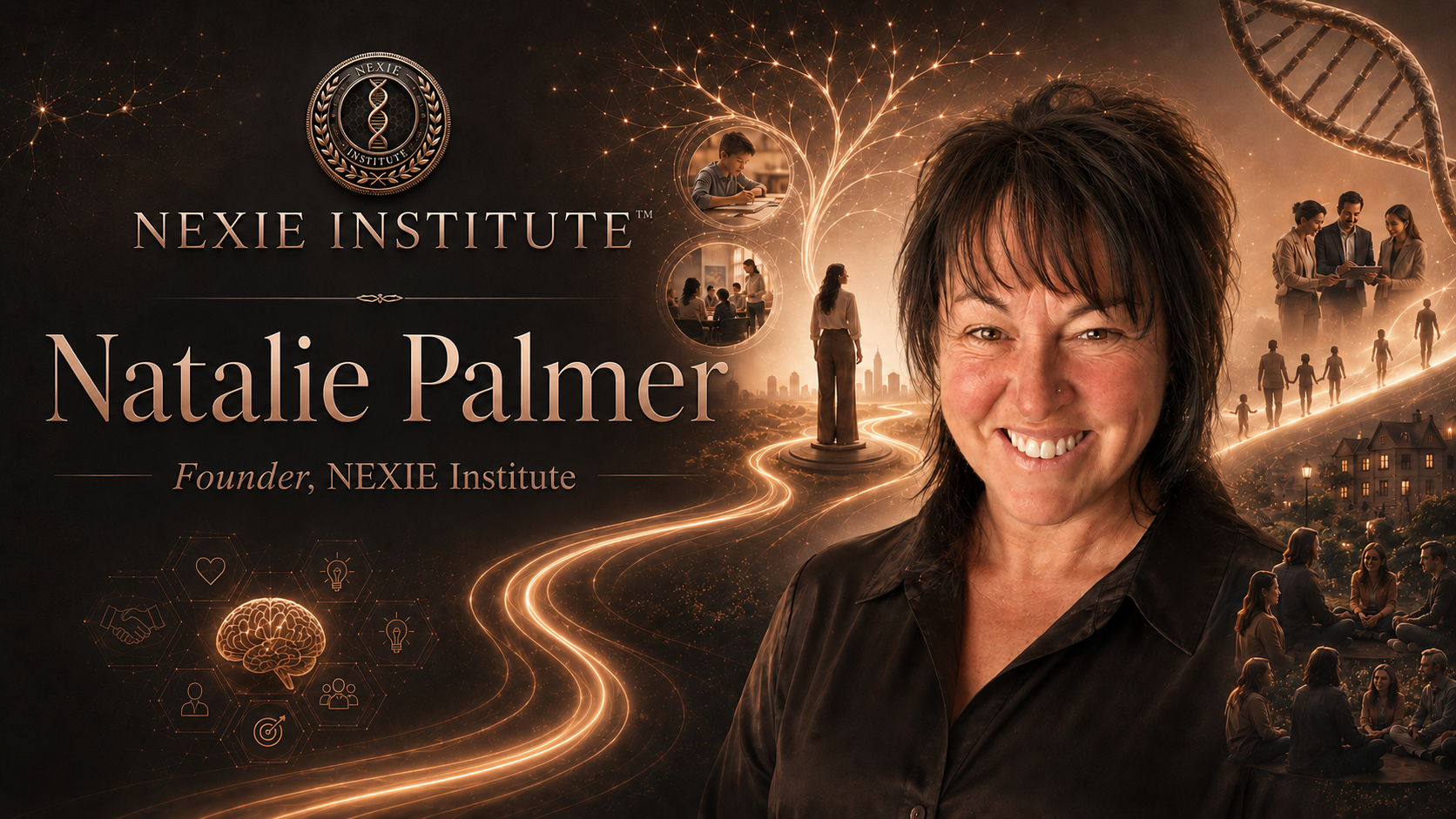
Founder story
NEXIE grew from more than two decades of experience across education, developmental support, trauma-aware practice and lived experience of adversity.
“What happens when a person’s capacity changes, but the people around them only see the behaviour?”
NEXIE was developed to create a more consistent pathway from understanding to safe response to growth.
Read the Founder Story ↗What NEXIE helps people do
NEXIE exists to turn understanding into safer, more useful action.Understanding Before Intervention.